
Helen Fu's blog

Public Engines to World: Look, But Don't Touch the Crime Data

funny pictures of cats with captionsEarlier this spring, Public Engines, Inc. sued ReportSee, Inc. in federal district court in Utah. Both companies maintain websites that publish local crime statistics and information gathered from law enforcement agencies. Public Engines gathers crime data by contracting with law enforcement agencies across the country to provide software and data management services. In contrast, ReportSee primarily gathers its information from public data feeds, police departments and, according to allegations in Public Engine's complaint, by scraping Public Engine's CrimeReports.com website. The complaint alleges breach of contract because scraping violates the terms of service of the website and hot news misappropriation, among other claims. (Techdirt has a good outline of the claims in the complaint and our legal threats database entry on this case has more background along with links to the complaint and other legal documents.)

This strange case got another wrinkle on June 24, 2010, when both parties stipulated to a preliminary injunction that bars ReportSee from any further scraping activity, making any commercial use of crime report data from Public Engines websites, and from contacting or communicating with law enforcement agencies for the purpose of obtaining Public Engines' data feed.  read more »

Out of the Lab and Into the Fray, Scientists and Science Writers Talk About the New Media Environment

Last Friday, the Harvard Kennedy School's Program on Science, Technology & Society hosted a conference to discuss science journalism online. Alongside scientists and science journalists, Sam Bayard and Kimberley Isbell from the Citizen Media Law Project discussed the roles and responsibilities of science journalists and scientists who write online. They also considered how science writers can manage their online communities. (For more information, check out our Legal Guide on Section 230 of the Communications Decency Act and the discussion of strategies and options for managing online communities from our conference on April 9th.)   read more »

Government Data: This Data Was Made for You and Me?

In March, Google launched its Public Data Explorer, expanding upon its public data search feature that's been around since last spring. Earlier this month, Columbia's Graduate School of Journalism announced a joint degree program to train tech-savvy journalists. It looks like computer assisted reporting is finally going mainstream and moving past its "hacker journalist" label and identity crisis.   read more »

Open Government Data Presents New Journalism Opportunities and Legal Challenges

It’s been a long time since a printed newspaper delivered to your doorstep or purchased on your way to work was the only way to get your daily dose of news. Now you can access those news publications on a laptop, smartphone, e-book reader, or—soon—on Apple’s tablet. In addition to an ever-expanding array of formats through which to read the same content, online publishing has enabled a whole range of new journalistic ventures from hyperlocal guides of stops along a light rail route to blogs focused on local government and politics. Even The New York Times has been making use of Twitter feeds and frequently updating blog posts in its coverage of the earthquake crisis in Haiti. Journalism is no longer only about storytelling; it can include a whole host of ways to inform the public.   read more »

Chamber of Commerce to the Yes Men: We Are Not Amused

What do Tommy Hilfiger, MasterCard, the World Wrestling Federation, and Tom "Scopes monkey trial" Donohue, the President of the U.S. Chamber of Commerce, have in common? Apparently, none of them has a sense of humor when it comes to their respective brands.    read more »

Think Twice Before You Dust Off Those Mix Tapes
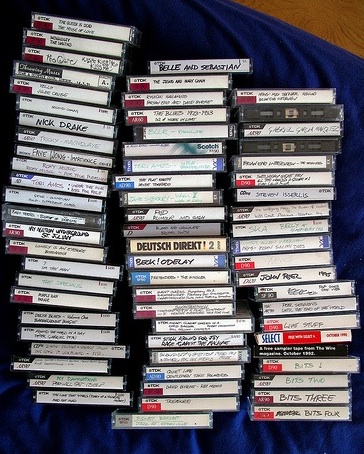
Digital technologies have allowed people to share music in unprecedented ways, and earlier this week recording artists, music industry leaders, and policymakers gathered at George Washington University in Washington, D.C. for the Future of Music Policy Summit sponsored by the Future of Music Coalition to talk about their impact on the music community. Also on the agenda were panels on how recording artists can use digital technology and social media to share and promote their work. Unfortunately, some of our intuitions of what kinds of sharing are okay don't always square with the law of copyright. The result has been confusion about the boundaries for legal conduct. For instance, we recently received this inquiry from a reader: "Can I post a mix tape on my blog to highlight a new recording artist? Can I allow visitors to download my mix tape?"   read more »


Copyright 2007-11 Citizen Media Law Project and respective authors. Except where otherwise noted,
content on this site is licensed under a Creative Commons Attribution-Noncommercial-ShareAlike 3.0 License: Details.
Use of this site is pursuant to our Terms of Use and Privacy Notice.