Sam Bayard's blog

Texas Appeals Court Upholds Dismissal of Principal's Lawsuit Over Fake MySpace Page

Last week, the Fourth Court of Appeals in San Antonio, Texas upheld the trial court's dismissal of Clark High School vice-principal Anna Draker's lawsuit against two students and their parents over a fake MySpace profile. Benjamin Schreiber and Ryan Todd allegedly created a fake MySpace page for Draker in 2006, which contained her name, photo, place of employment, and explicit and graphic sexual references implying that she was a lesbian. After learning about the fake profile, Draker contacted MySpace, which promptly removed the page.

Not content to stop there, Draker sued Schreiber, Todd, and their parents, asserting claims for defamation, negligent supervision, and intentional infliction of emotional distress.  On a motion for summary judgment, the Texas trial court dismissed the defamation claim, ruling that the statements appearing in the fake profile were not defamatory as a matter of law because they asserted no facts that could be objectively verified.  The district court ruled on a separate motion that Draker's intentional infliction of emotional distress claim failed because it repackaged the same allegations as the defamation claim. Draker appealed this latter ruling only. 

The tort of intentional infliction of emotional distress may be less familiar to our readers than defamation. There are four elements of an intentional infliction of emotional distress claim:   read more »

AutoAdmit Update: "A Horse Walks Into A Bar" Gets Feisty

You know you've got a pretty good job when you turn to the first order of business for the day and read this:

NOW COMES Defendant, A horse walks into a bar, a.k.a. Ryan Mariner ("Mariner"), and specially appears, without having been properly served and without waiving his right to proper service, and files this Brief in Support of his Motion to Dismiss Plaintiff's Second Amended Complaint against him.
Gosh, I love lawsuits against pseudonymous defendants . . .

One of the John Doe defendants in the sprawling AutoAdmit litigation has come out swinging, revealing his true identity and asserting that he "has done nothing wrong." Ryan Mariner, formerly known as "A horse walks into a bar," filed a motion to dismiss on Wednesday in federal court in Connecticut, asking the court to set him free from the case, which has been going on for over a year. 

He argues that the two anonymous Yale Law students who are plaintiffs in the case have willfully failed to serve him and prosecute the action against him, despite repeated offers by his counsel to accept service of the complaint. He argues that the plaintiffs' only possible motive for continuing to name him as a defendant in their second amended complaint and yet failing to serve him "seems to be to threaten and harass him by abusing the legal system." Ouch!

Mariner opens up a surprisingly literary can of whup-ass:   read more »

Blogger Bullied Over Phrase "Branded Community"

Denise Howell at Lawgarithms points us in the direction of a recent legal threat that goes right to the intersection of trademark law and freedom of speech.

On July 26, 2008, Rob Frankel of i-legions sent an email to tech blogger Jennifer Leggio of ZDNet Feeds complaining about a post by guest author Aaron Strout that used the term "branded communities." Frankel indicated that i-legions owns a federally registered trademark in the term "branded communities" and claimed that Leggio "should not be using the term at all without our express written consent."

Strout's July 23, 2008 post functioned as a "primer" on what steps online businesses should take in evaluating their "community engagement strategies."  It used the term "branded communities" in the ordinary, if slightly business-speak-y, sense to refer to an online community sponsored by a brand.  For example, it included the following text:   read more »

Online News Site Challenges Secret Court Proceedings

Last Wednesday, the Newspaper Tree, an online news site out of El Paso, Texas, which focuses on business, politics, and culture in the region, filed a motion objecting to an El Paso federal court's sealing of plea hearings and court documents in the pre-trial phases of a large public corruption prosecution. That same day, Judge Frank Montalvo of the U.S. District Court for the Western District of Texas ordered the government to file a response by September 5. 

In May 2008, Judge Montalvo rejected a similar motion by a community activist to open the court's proceedings, ruling that the government's interest in the integrity of its ongoing investigation and in preventing witness intimidation outweighed the public's interest in access. At that time, the court released a few documents in redacted form, but refused to provide access to plea hearings (including putting the date of such hearings on the public docket or providing transcripts), plea agreements, and affidavits filed in support of warrants in the case.    read more »

Blogger and Maryland Police Chief Settle Defamation Lawsuit

Last week, Salisbury, Maryland Police Chief Allan Webster and Joe Albero, operator of the Salisbury News blog, reached a settlement in Webster's defamation and false light lawsuit, just hours before the case was scheduled for trial. Albero reported on his blog that no money exchanged hands under the settlement, but the precise terms are not public. 

Webster filed the lawsuit in  May 2007 after Albero, who often takes local politicians to task, criticized Webster and posted information about him on the Salisbury News. The dispute revolved in part around Albero's posting of a third-party, anonymous letter addressed to Salisbury City Council Members, which expressed negative views about Webster.

In a pre-trial memorandum, Albero argued that he should not be compelled to disclose his source for the letter. He argued that the identity of the source was not relevant to the case, that Maryland's shield law protected him from having to identify his source, and that section 230 of the Communications Decency Act (CDA 230) immunized him from liability for posting the letter.   read more »

Berkman Cyberlaw Clinic, EFF, and Net Law Luminaries File Amicus Brief in Lori Drew Case

We've posted before (here and here) on the tragic Megan Meier suicide case, in which a 13-year-old neighbor of Lori Drew committed suicide in October 2006 after a "boy" she met on MySpace abruptly turned on her and ended their "relationship." In May 2008, federal prosecutors in Los Angeles indicted Drew, who allegedly pretended to be 16-year-old "Josh Evans" on MySpace and precipitated Megan's suicide with hurtful comments, for violating the Computer Fraud and Abuse Act (CFAA), 18 U.S.C. § 1030, which usually applies to hacking. The heart of the government's theory is that Drew criminally accessed MySpace servers "without authorization" or "in excess of authorization" because she violated the social networking site's terms of service by creating an account with inaccurate registration information and engaging in hurtful speech.   read more »

District Court Spanks Michael Savage Suit: Using Audio Clip for Criticism = Fair Use

In a huge victory for freedom of speech, on Friday a federal district court in California dismissed conservative talk show host Michael Savage’s lawsuit against the Council on American-Islamic Relations (CAIR).  The decision reaffirms that using limited portions of someone’s copyrighted work for purposes of criticizing that work generally falls within copyright law’s fair use exception.

Savage’s complaint alleged that CAIR violated Savage’s copyright by posting a four-minute audio clip taken from one of Savage’s shows, in which Savage made disparaging and hateful remarks about Muslims and Islam.  CAIR posted the audio clip on its website along with detailed criticism of Savage’s remarks and a call for "radio listeners of all faiths to contact companies that advertise on Michael Savage's nationally-syndicated radio program to express their concerns about the host's recent anti-Muslim tirade.”

Besides alleging copyright infringement, Savage also claimed that CAIR violated federal racketeering laws.  In particular, he alleged that CAIR’s copyright infringement was part of a criminal conspiracy to silence those speaking out against Islam and to further the goals of foreign terrorist organizations. For good measure, Savage alleged that CAIR is the domestic branch of a foreign terror organization posing as a civil rights organization, and that CAIR had something or other to do with 9/11.  read more »

Max Mosley's S&M Party Not A Matter of Legitimate Public Concern, Says English Court

Admittedly, Max Mosley's lawsuit against an English tabloid is not the heartland of citizen media, but who can resist posting about a story that involves "sadomasochistic orgies, car racing, and Nazis," as Bill McGeveran puts it.  Mosley, the head of the governing body for Formula One racing, sued the News of the World for reporting in March 2008 that he organized a “sick Nazi orgy” with five prostitutes and for posting a surreptitiously recorded video of the party on its website. Mosley claimed that the S&M extravaganza had no Nazi theme and that recording and publishing the video and story violated his right to privacy under the European Convention on Human Rights. England's High Court ruled in Mosley's favor yesterday and awarded him £60,000 in compensatory damages and  £450,000 in attorneys' fees (ouch!). BBC news has a good article providing lots of background.

The big issue in the case was whether details about the S&M orgy were a matter of legitimate public concern. English law (or the English court's interpretation of the European Convention), like U.S. law, recognizes a defense to a publication of private facts claim when the matter publicized is newsworthy. The tabloid argued, reasonably enough, that a public figure holding a Nazi-themed sex party was newsworthy, especially when this public figure's father was notorious fascist Sir Oswald Mosley. Mosley argued that there was no Nazi element to the party and thus his private consensual sexual acts were not newsworthy.   read more »

Appeals Court Strikes Down the Child Online Protection Act (Again)

Yesterday, the Third Circuit Court of Appeals affirmed a lower court decision ruling that the Child Online Protection Act (COPA) violates the First Amendment.  COPA makes it a crime to knowingly post sexually explicit material that is "harmful to minors” on the web  “for commercial purposes.” Although Congress apparently intended that COPA apply to commercial pornographers, the statute's broad definition of "commercial purposes" could draw in ordinary websites that make money from advertising, which is why Salon Media Group, Nerve.com, and Dan Savage, among others, joined in the lawsuit challenging the Act.

Among other things, the Third Circuit determined that "COPA, like the Communications Decency Act before it, 'effectively suppresses a large amount of speech that adults have a constitutional right to receive and to address to one another,' and thus is overbroad." The court also ruled that the statute was unconstitutionally vague and not narrowly tailored to the government's admittedly compelling interest in protecting minors from harmful material on the Internet.    read more »

More Trademark Goodness From Bill McGeveran

Bill McGeveran, our good friend from University of Minnesota Law School, recently posted on SSRN a new article about the practical and procedural problems associated with trademark fair use and other free-expression-related defenses to a trademark claim. The article, Rethinking Trademark Fair Use, which will appear in the Iowa Law Review at the end of 2008, is an expanded treatment of the issues raised in his Four Free Speech Goals for Trademark Law, which I blogged about back in April. Here's the abstract:   read more »

Center for Social Media Launches Its Code of Best Practices in Fair Use for Online Video

Today, the Center for Social Media at American University released its Code of Best Practices in Fair Use for Online Video, a publication meant to help online video creators, service providers, and copyright holders to interpret the copyright doctrine of fair use. The Code (full-text pdf) provides a guide to "current acceptable practices, drawing on the actual activities of creators" and backed by a panel of legal and media scholars, including Berkman fellow Lewis Hyde, Anthony Falzone from Stanford's Center for Internet and Society, Henry Jenkins from M.I.T., and Pamela Samuelson from U.C. Berkeley. Pat Aufderheide and Peter Jaszi of American University coordinated the project.

The Code, which takes an optimistic view on fair use ("Fair use is flexible. It is not uncertain or unreliable."), identifies six common situations that online video makers may face:   read more »

Citing CDA 230, Court Dismisses Defamation Suit Against Wikimedia Foundation

News reports (here, here) indicate that New Jersey Superior Court Judge Jamie S. Perri dismissed Barbara Bauer's defamation lawsuit against the Wikimedia Foundation yesterday. In what appears to have been an oral ruling from the bench, the court relied on section 230 of the Communications Decency Act (CDA 230), which protects providers and users of interactive computer services from state-law tort liability for publishing the statements of third parties, to dismiss Bauer's claims. (For more on CDA 230, see our Primer on Immunity and Liability for Third-Party Content Under Section 230 of the Communications Decency Act).   read more »

Judge Says Former Congressman Can Get Names of Anonymous Posters from LoHud.com

LoHud.com, an online news site operated by The Journal News that focuses on New York's Lower Hudson Valley, reported on Friday that a Westchester County judge has ruled that it must turn over the names of three pseudonymous posters to former House Representative Richard Ottinger and his wife, June Ottinger. According to the report, Ottinger and his wife subpoenaed The Journal News asking for identifying information for posters to the site's Mamaroneck community forum going by the psuedonyms "SAVE10543," "hadenough," and "aoxomoxoa." The posters allegedly made statements accusing the Ottingers of unsavory conduct in the course of a neighborhood dispute over their construction of a house in the Village of Mamaroneck, NY. 

The Journal News moved to quash the subpoena,  but the court ruled that the newspaper had to turn over the requested information.  Although the details are still sketchy, the court appears to have applied the standard for protecting the First Amendment right to anonymous speech set forth in Dendrite v. Doe, 775 A.2d 756 (N.J. Super. Ct. App. Div. 2001). We are trying to get the underlying court documents, and we'll update this post and our database entry, Ottinger v. The Journal News, when we have more information.    read more »

More on Prince, Bootlegging, and Copyright Protection for Live Performances

All right copyright geeks, it's time to do some more hypothesizing on the Prince/Radiohead/YouTube flap I blogged about in my previous post, Prince, Radiohead, and the Bootlegging Provision of the Copyright Act. Readers posted great comments that merit some elaboration in this post. The idea here is not to provide any sure answers (because I don't have them), but to raise some questions for further discussion. If you are not a copyright lawyer, you'll have to excuse the technical bent; there's just no way to deal with these questions without getting a little esoteric.

To recap, previously I discussed whether the mystery bootlegger who recorded and posted Prince's cover of Radiohead's "Creep" at the Coachella Valley Music & Arts Festival might have violated the anti-bootlegging provision of the Copyright Act, 17 U.S.C. § 1101 and whether sending a DMCA takedown notice was an appropriate legal response. The next day, Eric Goldman of the Technology & Marketing Law Blog, posted the following intriguing comment:   read more »

Appeals Court Rejects Trademark Claims Against Parody Website

In late May, the United States Court of Appeals for the Tenth Circuit issued an opinion in Utah Lighthouse Ministry v. Foundation for Apologetic Information and Research, 2008 WL 22043807 (10th Cir. May 29, 2008). With this decision, the Tenth Circuit joins an expanding group of federal appeals courts holding that federal trademark law does not prohibit a noncommercial website's use of a trademark for purposes of commenting on or criticising the trademark owner. See, e.g., Bosley Medical Institute, Inc. v. Kremer, 403 F.3d 672 (9th Cir. 2005); Taubman v. Webfeats, 319 F.3d 770 (6th Cir. 2003); Falwell v. Lamparello, 420 F.3d 309 (4th Cir. 2005). The case is not your usual "gripe site" case, but instead involves a more subtle parody of an ideological opponent's website.   read more »

The (Proposed) Megan Meier Cyberbullying Prevention Act Is Crazy

In a twist on the old adage "hard cases make bad law," Representatives Linda Sanchez (D-CA) and Kenny Hulshof (R-MO) introduced a bill (H.R. 6123) in the House on May 22 which, if passed, would be known as the Megan Meier Cyberbullying Prevention Act. If anyone is not already familiar with the Megan Meier tragedy, you can consult our previous posts (here, here, here). The bill would make it a federal crime to

transmit[] in interstate or foreign commerce any communication, with the intent to coerce, intimidate, harass, or cause substantial emotional distress to a person, using electronic means to support severe, repeated, and hostile behavior, shall be fined under this title or imprisoned not more than two years, or both.

Eugene Volokh has some razor-sharp analysis laying out why this well-intentioned bill is unconstitutional. Check it out. (For more information on the bill, see OpenCongress.)

EFF Asks Court to Protect Anonymity of Fake-Profile Creator

Larry Dominick, the Town President of Cicero, Illinois, is seeking information from MySpace about an anonymous user who set up fake profiles for him on the social networking site. He filed a petition in Illinois state court, seeking permission to issue interrogatories and document requests to MySpace about the user's identity. Dominick, who filed the petition in his capacity as Town President, contends that he has potential legal claims for defamation and invasion of privacy, but his petition does not identify any specific defamatory statements or describe the content of the profiles in detail. MySpace has taken down the offending pages, but has otherwise stayed out of the fray. Luckily, EFF has stepped in as amicus curiae and filed an excellent brief arguing that Dominick has not met the heightened requirements demanded of plaintiffs seeking the identity of anonymous Internet speakers.   read more »

Prince, Radiohead, and the Bootlegging Provision of the Copyright Act

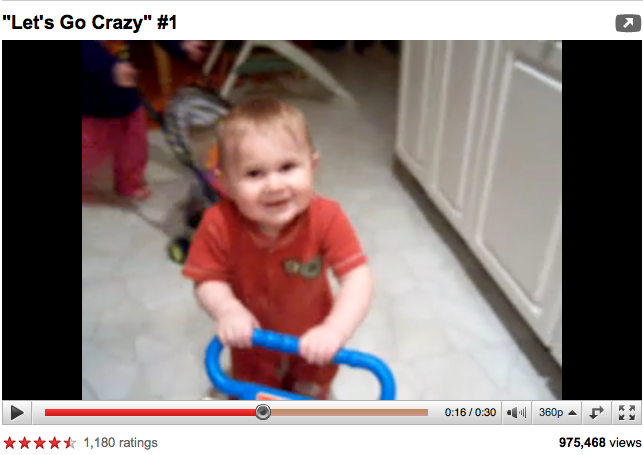
Prince is at it again. We've covered his legal antics before -- his lawyers went after a number of fan sites last November, and Universal Music sent a takedown notice to YouTube last June over a video of a toddler dancing with "Let's Go Crazy" playing in the background. This time, his record label apparently sent a takedown notice to YouTube over a video of Prince performing a cover of Radiohead's "Creep" at the Coachella Valley Music & Arts Festival. The interesting thing is that Radiohead wants the video put back up. A copy is available at present, but it's hard to tell whether this is because someone else posted the video or because YouTube put it back up at Radiohead's request.

Untangling all the legal strings here is more difficult than it initially appears. At first, this looks like His Purpleness engaging in some flagrant DMCA abuse. Radiohead owns the copyright in the musical composition of "Creep," and the concertgoer probably owns the copyrights in his sound and video recording of the performance (anyone know the technical details on this?). But Prince may have some legal ground to stand on.   read more »

Singaporean Company Claims Patent to Image-Based Linking: Patent Busting Needed!

Vuestar, a patent-holding company from Singapore that describes itself as "the Pioneer of visual search," is asserting patent rights in the technology that enables websites to link to other webpages using an image rather than text. According to Ars Technica, the firm recently has been sending invoices to companies that it believes are using its patented technology. The impact of this patent claim could be huge -- as another report puts it, "almost every site on the Internet" uses this technology to link photos and graphics to other webpages. This Vuestar logo is a good example (and, no, it doesn't link to Stuff on My Cat.com):

Vuestar claims to hold patents in Singapore, Australia, and the United States. The U.S. patent, titled "Method of locating web-pages by utilising visual images," was filed in 2001 and granted by the U.S. Patent and Trademark Office in 2006. While the patent claim itself appears to describe an image-based search engine technology (which sounds very similar to Google Image Search), Vuestar apparently believes that the claim extends further. The FAQ section of Vuestar's website makes clear that the company views ordinary website image-linking practices as within the scope of its patent.   read more »

Consumer Advocate's Free Speech Rights Upheld in UDRP Trademark Proceeding

Back in 2006, Robert Arkow, a self-styled consumer advocate who played a role in establishing the California (and then federal) Do Not Call lists, created a website at "metrolinkriders.com." The site hosts a forum for users and employees of Metrolink, the local commuter railway service in southern California, to comment upon Metrolink's services and policies. A small group of readers frequent the site, contributing on topics like possible fare increases and customer service issues. The Southern California Regional Rail Authority (SCRRA), the government authority that runs Metrolink, took umbrage and ended up initiating an administrative proceedings against Arkow under the Uniform Domain Name Dispute Resolution Policy (UDRP). Recently, Arkow won his case.   read more »