

Privacy
 In 2012, a bevy of internet companies and web sites waged a successful
 Montesquieu, Come Back! (The French Police Already Know Where You Are)
 On December 19, 2013, the French
 A Lesson in Metadata: Harvard Bomb Hoax
 [We are delighted to run this piece by our friend and Berkman Center colleague Ryan Budish - eds.]
French Court: Claim of First Amendment Rights in Search Results Inconsistent with "Neutral and Passive Role" as Host
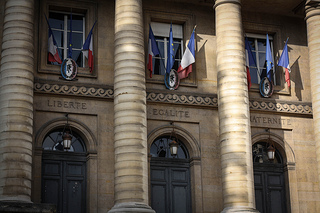 On November 6, the Paris Tribunal de Grande Instance (TGI) ordered Google and Google France to withdraw and stop displaying in their search engine results, for a period of five years, nine pictures of British citizen Max Mosley. By doing so, the TGI refused to consider Google as a mere Internet intermediary that provides hosting and/or caching functions.
Cash Cutoff for Mugshot Sites A Dangerous Idea
 If you're arrested, your arrest is public information: your name, your address, what you're accused of. Many news organizations publish this information on a daily basis for their communities, as part of their news coverage.
So Close, Yet So Far: FBI Access to Silk Road Bitcoin Fortune May be Blocked by the Fifth Amendment
 The government's quest for a password-protected bitcoin fortune from the Silk Road shutdown may lead to a Fifth Amendment battle over whether a constitutional right against self-incrimination can protect the website's founder from compulsion of data.
Federal Court Finds Stored Communications Act Applies to Facebook Wall Posts
CJEU Advocate General Finds No Right to be Forgotten by Search Engines under EU Law
 On June 25, 2013, the Opinion of the Advocate General Niilo Jääskinen (AG) in case C-131/12,
 Metadata Surveillance, Secrecy, and Political Liberty (Part Two)
 (This is the second part of a two-part post. In
 Rodriguez v. Widener University

Metadata Surveillance, Secrecy, and Political Liberty (Part One)
 (Following on from
 Are Social Media Password Privacy Statutes #necessary?

Missouri Recording Law
The NSA's Spying Powers: Reading the Statute
 [Ed. note -- We are pleased to feature a guest post today by Kit Walsh of the
 Massachusetts Courts Mull Right of Access to Deceased Family Members' E-mail
 A case in the Massachusetts Court of Appeals,
 Florida Bill Targets “Mugshot Websites,” Hits Crime Reporting
 A new bill proposed by Florida legislator Carl Zimmermann seeks to end “mugshot websites,” a relatively new industry that exploits the marriage of the internet and open records laws in order to make a profit.
The Journal News Fallout: Limiting the First Amendment to Protect the Second

A Special Deal Just For You: The Value of Big Data Continues to Elude Consumers
 For a while now, one of the main causes of concern for privacy advocates has been "Big Data," that is, the collection, aggregation and analysis of data, on a, well, BIG scale. This post takes the opportunity to review some specific issues and recent developments in this area.
Honni Soit… French Republic Protects the Privacy of Commoners and of Kings
 On September 14, French weekly gossip magazine Closer published several pictures of the Duke and Duchess of Cambridge taken without their consent while they were spending a weekend at a private villa in the South of France. Some of the pictures showed the Duchess wearing only the bottom of a bikini suit.
Garcia v. Nakoula
Pages




Description:
Miguel Rodriguez is a U.S. Navy veteran, who attended Widener University under the G.I. Bill as a student in the Biology Pre-Med Program, and worked as a tutor and Advisor and Operations Manager at the University. In a complaint filed March 13, 2013 in the Eastern District of Pennsylvania, Rodriguez brought eight causes of action against Widener University, the City of Chester, David Coughlin, Denise Gifford, Patrick Sullivan, and Matthew Donohue, claiming civil rights and privacy violations arising out of events that transpired after Defendant Sullivan, Widener's Director of Campus Safety, allegedly gained access to and printed images from Rodriguez's Facebook account without authorization on March 16, 2011.
According to the complaint, as a result of the unauthorized access Widener University and Chester Police Officer Matthew Donohue brought Rodriguez in for interrogation and temporarily suspended him. According to Sullivan, he was suspended because "he was perceived to be a threat to the community and . . . displayed weapons on Facebook." At the end of this interrogation, Rodriguez was involuntarily sent to Crozer Chester Medical Center for one week, during which Rodriguez was forced to miss a medical school admissions interview. When he was cleared by the Medical Center, the suspension was continued due to a small amount of marijuana and a knife found when the Chester police searched his book bag during the investigation process. The University then made readmission contingent upon a positive assessment by Dr. Beth Howlett in Widener's Office of Disabilities Services. During this time, David Coughlin, Rodriguez's advisor, allegedly made false statements to the campus and Chester police about Rodriguez, claiming he was restricted from campus and had been making threatening calls. On March 25, 2011, Rodriguez was expelled from Widener University and his employment with the University was terminated.
Rodriguez claimed the Defendants violated the Civil Rights Act, 42 U.S.C. § 1983, arguing that the unwarranted dismissal and termination, as well as interrogation and involuntary admission to the hospital, violated his rights under the Fourth and Fifth Amendment. This claim was accompanied by a § 1985 claim for conspiracy to interfere with civil rights. Rodriguez similarly claimed a violation of his equal protection rights, asserting that the Defendants discriminated against him based upon his disability, race, and/or status as a "class of one;" and that the Defendants violated the Rehabilitation Act by dismissing Rodriguez as a student and terminating his employment rather than providing accommodations for his mental disability. The complaint also asserted several privacy-related claims, including an invasion of privacy under the Fourth Amendment when the Defendants accessed information on Rodriguez's Facebook page and obtained medical information from the hospitals he was admitted to without his consent. Rodriguez also argued that accessing his emails and Facebook page and using the photos found therein without his authorization constituted a violation of the Electronic Communications Privacy Act and the Stored Communications Act. Lastly, under Pennsylvania's common law, Rodriguez argued that he had a reasonable expectation of privacy with respect to his Facebook account, which was violated by the Defendants' unauthorized access of the account.
In response, the Widener Defendants moved to dismiss the complaint on April 4, 2013. First, the Widener defendants argued that they are not state actors for the purposes of 42 U.S.C. §§ 1983 and 1985 or under the U.S. Constitution, and that therefore the Civil Rights Act, equal protection, and Fourth Amendment-based privacy claims should be dismissed. The Defendants also maintained that Rodriguez could not pursue a cause of action under the Rehabilitation Act as he had never disclosed the disability to the University or sought accommodation for the disability prior to his suspension. Lastly, as Rodriguez's Facebook posts were accessible to the public generally and/or forwarded to the Defendants by concerned students who had been permitted access to his Facebook page, the Defendants moved to dismiss the ECPA and SCA claims, as well as the Pennsylvania privacy claim, as these all rely on improper access.
On April 25, Rodriguez opposed this motion. First he argued that despite being private parties, the Widener Defendants are state actors, as they "willfully participated in a joint conspiracy with state officials to deprive a person of a constitutional right acts ‘under color of state law'" by bringing in the Chester police. He also alleges that the Defendants were aware of his mental disability, made particularly clear during the interrogation, and perceived Rodriguez as disabled, sufficient to sustain a claim under the Rehabilitation Act. As to those claims that rely on unauthorized access to Rodriguez's Facebook account, Rodriguez reasserted that he did not post them publically, though it remains to be determined how the Defendants obtained the images.
The District Court granted in part and denied in part the Widener Defendants' motion to dismiss in an order on June 17, 2013. The Court dismissed Rodriguez's first four claims, which relied on finding the Widener Defendants to be state actors. The Court concluded that Rodriguez failed to plausibly allege state action, such that the Civil Rights Act and Fourth Amendment claims could not be properly sustained. In addition, the Rehabilitation Act count was dismissed, as the Court held that Rodriguez failed to establish that Widener University should have been aware that he was entitled to any accommodations or that he ever requested such accomdations. Discussing the ECPA and SCA claims together, the Court concluded that to the extent that these statutory claims were based on improper access to Rodriguez's Facebook images, the claims may proceed. Judge Padova's opinion noted that there was no factual basis for the Defendants' assertion that Rodriguez's Facebook images were generally available to the public, whereas the emails in question had been sent by Rodriguez himself to some of the Defendants. With respect to the common law invasion of privacy claim, the Court narrowed the claim down to the two theories of privacy that could possibly be plausible: publication of private facts and false light. Because Rodriguez failed to allege the elements a privacy claim under either theory, this claim was also dismissed.
Following the Court's order dismissing most of Rodriguez's claim, on July 2, 2013, the Widener Defendants answered the complaint regarding the surviving SCA and ECPA claims. Their defenses emphasized the public nature of Rodriguez's Facebook postings, arguing that they were generally available to the public, or in alternate, permissbly accessible to third parties who in turn shared the information with the Widener Defendants.
The City of Chester and Officer Donohue also filed a 12(b)(6) motion to dismiss on July 15, 2013. The parties stipulated that of the many claims made by Rodriguez, the only claim against the Chester Defendants was for false arrest in violation of the Fourth Amendment under 42 U.S.C. § 1983. The Chester Defendants argued that they did not directly cause a constitutional deprivation and that Rodriguez's complaint made no allegation that his constitutional rights were violated by policies or customs of the municipality of Chester or Officer Donohue as its agent.