

 When using Pinterest (and Flickr and YouTube and Facebook
and on and on), what copyright, fair use, trademark and other issues
weigh on building communities and corporate use of fan pages and social media generally?
A hypothetical “Company” has plans for its Pinterest “community”, and
in particular, wonders about these situations:
When using Pinterest (and Flickr and YouTube and Facebook
and on and on), what copyright, fair use, trademark and other issues
weigh on building communities and corporate use of fan pages and social media generally?
A hypothetical “Company” has plans for its Pinterest “community”, and
in particular, wonders about these situations:
- Using Images of Identifiable People
- Fair Use and Images
- Trademarks: When is a “Fair Use” Argument Strongest?
- Why Attribution and Linking to Original Sources is Important
3 introductory questions:
Question #1: Someone used to be a paid Company sponsor or spokesperson. They are no longer. Can the Company continue to post a photo of the old sponsor to Pinterest? Short Answer: If the contract with the sponsor expressly permits it, yes. Ordinarily, the contract would specify engagement for limited time, and that would prohibit rights to use images beyond the contract period. But it really depends on what the contract says.
Question #2: Can the Company post a photo of a fan of the Company? Short Answer: Express consent is required, either through a release or the fan’s agreement (whenever the photo is submitted) to terms of service. Exceptions are discussed below.
Question #3: Can the Company post a photo of a Coca-Cola bottle on its Pinterest page? Short Answer: If the use of the image does not suggest (implicitly or explicitly) endorsement or association, then yes.
 “RTs do not = endorsements.”
 Unlike traditional newsroom journalists, “citizen journalists” have
no formal way to ensure that everyone maintains similar quality
standards. Which does not mean that quality standards are necessarily
(or consistently) maintained at traditional newsrooms, but rather that a
traditional hierarchical editorial structure imposes at least
theoretical guidelines.
Unlike traditional newsroom journalists, “citizen journalists” have
no formal way to ensure that everyone maintains similar quality
standards. Which does not mean that quality standards are necessarily
(or consistently) maintained at traditional newsrooms, but rather that a
traditional hierarchical editorial structure imposes at least
theoretical guidelines.
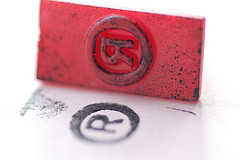 What are the differences between “special form” (stylized, design, logo) trademarks and “standard character” (word) trademarks?