



 As a Los Angeles Superior Court prepares to break new ground concerning defamation on
  Whether we consider the
 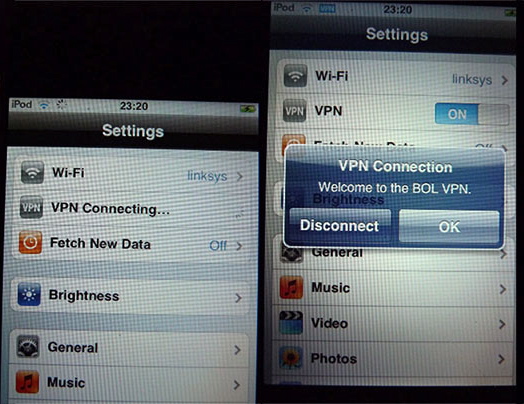 In the days of unwarranted government surveillance and elaborate data collection, people increasingly rely on anonymizing services to keep their online activities private, such as proxy servers, encrypted cloud storage, and virtual private networks. Virtual private networks, or VPNs, route online communications through a secure and encrypted private network to a remote server (sometimes in a jurisdiction with greater protection for freedom of speech or weaker law enforcement).
 As many of us clear out our CD collections and move to digital music, more and more used CDs are making their way to garage sales, used music stores, eBay, Goodwill, and more. We don't worry about being sued for copyright infringement, because the
  This Thursday I'll be joining Jason Sweet from the Cambridge law firm (and
 When using Pinterest (and Flickr and YouTube and Facebook
and on and on), what copyright, fair use, trademark and other issues
weigh on building communities and corporate use of fan pages and social media generally?
A hypothetical “Company” has plans for its Pinterest “community”, and
in particular, wonders about these situations:
When using Pinterest (and Flickr and YouTube and Facebook
and on and on), what copyright, fair use, trademark and other issues
weigh on building communities and corporate use of fan pages and social media generally?
A hypothetical “Company” has plans for its Pinterest “community”, and
in particular, wonders about these situations:
- Using Images of Identifiable People
- Fair Use and Images
- Trademarks: When is a “Fair Use” Argument Strongest?
- Why Attribution and Linking to Original Sources is Important
3 introductory questions:
Question #1: Someone used to be a paid Company sponsor or spokesperson. They are no longer. Can the Company continue to post a photo of the old sponsor to Pinterest? Short Answer: If the contract with the sponsor expressly permits it, yes. Ordinarily, the contract would specify engagement for limited time, and that would prohibit rights to use images beyond the contract period. But it really depends on what the contract says.
Question #2: Can the Company post a photo of a fan of the Company? Short Answer: Express consent is required, either through a release or the fan’s agreement (whenever the photo is submitted) to terms of service. Exceptions are discussed below.
Question #3: Can the Company post a photo of a Coca-Cola bottle on its Pinterest page? Short Answer: If the use of the image does not suggest (implicitly or explicitly) endorsement or association, then yes.




Description:
Tarantino, a multiple Oscar winning and nominated writer and director, is the writer and owner of a screenplay entitled The Hateful Eight. The script was leaked by unknown persons. On January 22, 2014, the website Gawker.com published an article about the leak and Tarantino's reaction, and solicited readers to provide Gawker with a copy of the script. The following day, Gawker.com carried an article on its website with a hyperlink to a website where the document appeared.
Tarantino filed a complaint in the U.S. District Court for the Central District of California against Gawker Media, LLC, Gawker Media Group, Inc., and Gawker Entertainment, LLC (collectively, "Gawker") and Does 1-10, asserting the following claims:
The complaint alleges that Doe 1, also named as "AnonFiles.com," provided a full copy of the screenplay for download, which copy was either uploaded by Gawker or uploaded by another Doe defendant with Gawker's encouragement, and that other Does committed direct infringement by accessing the copy. The complaint further alleges that Doe 1 failed to respond timely or effectively to a DMCA takedown notice. The contributory infringement claim against Gawker is based on Gawker's providing a link to AnonFiles.com.
Gawker filed for a motion to dismiss for failure to state a claim upon which relief could be granted. Gawker argued that contributory infringement could not exist in the absence of direct infringement, and that merely accessing the script by clicking on the link provided by Gawker was not copyright infringement. Moreover, Gawker asserted merely encouraging others to read - but not copy, distribute, or otherwise use - the script on another site was not encouragement of copyright infringement. Finally, Gawker argued that publishing links to extant copies of Tarantino's work in the context of a news report was a non-infringing fair use pursuant to 17 U.S.C. § 107.
Tarantino, in his opposition to Gawker's motion, argued that the complaint's allegations that third parties accessed the screenplay via Gawker's link were sufficient to support a claim of direct infringement to support a claim of contributory infringement against Gawker. Because the screenplay was provided by Doe 1 in PDF format, Tarantino argued, it could not be viewed unless a complete infringing copy was downloaded to the user's computer. Tarantino further argued that Gawker's fair use argument was premature as asserting an affirmative defense, but went on to argue that Gawker's use was not fair because: (1) the primary purpose of the infringing use was commercial, not news reporting; (2) the use was not transformative; (3) the screenplay was unpublished; (4) the screenplay was a creative work, (5) the entire screenplay was made available; and (6) the disclosure of the screenplay undermined the market for the work.
In a subsequent reply brief, Gawker argued (among other things) that the format in which the screenplay was provided was neither relevant nor pleaded in the complaint, and that any allegations that Gawker was responsible for Doe 1's posting of the screenplay were purely speculative.
On April 22, 2014, the court granted Gawker's motion to dismiss, holding that Tarantino had failed to allege a claim of contributory infringement against Gawker because "nowhere in ... the Complaint does Plaintiff allege a single act of direct infringement committed by any member of the general public that would support Plaintiff's claim for contributory infringement. Instead, Plaintiff merely speculates that some direct infringement must have taken place." The court did not address Gawker's fair use arguments, finding that the "arguments, albeit persuasive and potentially dispositive, are premature." The court nevertheless granted Tarantino leave to amend the complaint to attempt to amend the defects in the claim against Gawker.
Tarantino filed a First Amended Complaint on May 1, 2014, dropping the Doe defendants and asserting claims solely against Gawker Media, LLC, for direct and contributory copyright infringement. The new complaint added allegations that Gawker itself downloaded an illegal copy of the screenplay and disseminated portions of the screenplay to others. On May 7, 2014, before Gawker was due to respond, Tarantino voluntarily dismissed the new complaint without prejudice, ending the case.