

David Ardia's blog

Changes Ahead for the Citizen Media Law Project

On May 20, 2007, I wrote my first blog post. It also happened to be the first post on this blog. Entitled "Time to Launch," I agonized for days over what to write and struggled with the fear of putting my words out to the entire world (if you remember your first time blogging, you know exactly how I felt). Fortunately, nobody came after me with a pitchfork and I gradually learned to control that fear. I also learned that if I surrounded myself with bright and talented lawyers they would make me look good. (Hint: that's been the secret to all my successes.) 

Four years and 220 blog posts later, it's time for me to move on. This fall, I'll be joining the faculty at the University of North Carolina School of Law. I'll also become the co-director of the UNC Center for Media Law and Policy. While I am sad to leave the Berkman Center, I'm excited about the opportunity to focus more on teaching and scholarship.  Jeff Hermes, the CMLP's Assistant Director, will be taking over the project. I'm confident that under Jeff's leadership the project will continue to find creative ways to address the growing legal needs of online and citizen media.    read more »

in

Newsgathering Law: A Guide for Reporting
I'm excited to announce the latest installment in a series of legal modules we are publishing in conjunction with Poynter's News University.  The free course, entitled Newsgathering Law & Liability: A Guide for Reporting, is designed for reporters, citizen journalists and anyone who wants to know more about the laws that relate to gathering content, interviewing sources and handling documents.  It's chock full of interactive exercises and quizzes and anyone can enroll at the NewsU site and take the course at their own pace. 

I co-authored the module with Geanne Rosenberg, Chair of the Department of Journalism and the Writing Professions at the City University of New York’s Baruch College.  This is our second course module at NewsU.  The first, entitled Online Media Law: The Basics for Bloggers and Other Publishers, went live in 2008 and -- shockingly -- is NewsU's most popular legal course.  Hopefully we will catch some of that magic with this one.

Funding for the course was provided by the Harnisch Foundation and Cutts Foundation.

Introducing Jeff Hermes, CMLP's New Assistant Director

I'm excited to welcome Jeff Hermes, the Citizen Media Law Project's new Assistant Director.

Jeff is a Fellow at the Berkman Center for Internet and Society (where the CMLP is based).  He received his J.D. degree from Harvard Law School in 1997. Prior to joining the Berkman Center, Jeff assisted a wide array of clients in First Amendment, media, intellectual property and Internet law issues as a partner in the litigation practice of Brown Rudnick LLP and later as counsel to Hermes, Netburn, O'Connor & Spearing, P.C. in Boston.

Over the last fourteen years, Jeff has represented an international media network and its subsidiaries, major metropolitan newspapers, local broadcasters on television and radio, Internet-based publishers and social media networks. He has written for numerous publications and spoken at a wide array of events on media law issues, including extensive collaboration with the Media Law Resource Center. Jeff received his undergraduate degree, summa cum laude, from Princeton University in 1994.

Please join me in welcoming Jeff! 

in

CMLP and Cyberlaw Clinic Ask Supreme Judicial Court to Affirm Public Right of Access to Inquest Records

With the help of Harvard Law School's Cyberlaw Clinic, the Citizen Media Law Project and a coalition of New England media and advocacy organizations submitted an amicus curiae brief last week to the Massachusetts Supreme Judicial Court, seeking to ensure a public right of access to inquest materials that will allow journalists, bloggers, and other news gatherers to inform citizens on matters of public concern.

The case involves Amy Bishop, the professor of neuroscience at the University of Alabama who allegedly shot and killed three of her colleagues during a faculty meeting on February 12, 2010.  During their investigation of these events, Alabama authorities noted that, in 1986, Massachusetts police had investigated Bishop's involvement in the fatal shooting of her brother, Seth Bishop, and had deemed the shooting accidental. The shooting in Huntsville sparked a new inquiry into Seth Bishop's death, and in February 2010, the Norfolk District Attorney initiated an "inquest," which is an investigative, fact-gathering procedure. Mass. G.L. c. 38, § 8.

On June 16, 2010, a grand jury in Massachusetts indicted Amy Bishop for first-degree murder. Given the widespread public interest in the case, The Boston Globe filed a motion seeking to inspect the inquest transcript and report. The Superior Court denied the motion and ordered that the inquest materials remain impounded.

Harvard's Cyberlaw Clinic drafted the brief and we were joined by Community Newspaper Holdings, Inc., GateHouse Media, Inc., Massachusetts Newspaper Publishers Association, Metro Corp. d/b/a Boston Magazine and the New England Newspaper and Press Association, Inc.  The brief states:   read more »

Media Bloggers Assn Files Amicus Brief in Righthaven Case, Blasts Business Model Behind Lawsuits

Yesterday, the Media Bloggers Association filed an amicus brief in Righthaven LLC v. Hyatt, urging a federal judge in Nevada to award only minimal damages and no attorney's fees to Righthaven against a blogger who failed to appear in the case and is facing a default judgment.  We've covered a number of Righthaven lawsuits in our legal threats database, but this case now has a spicy twist.

On October 6, 2010, Righthaven sued Bill Hyatt, who operates a blog called "News for Everyone" (appears to be shutdown), for copyright infringement, claiming that he had copied a Las Vegas Review-Journal entertainment column titled "FX's Manly Man Shows Hold Outsider Appeal."  After Hyatt didn't respond to the lawsuit, Righthaven filed a motion for default judgment, asking the court to award it control of the domain name for Hyatt's website, $150,000 in damages, and $1,850 in legal fees and costs.  read more »

CMLP and Cyberlaw Clinic Urge First Circuit to Affirm First Amendment Right to Make Cellphone Recording of Police

With the help of Harvard Law School's Cyberlaw Clinic, the Citizen Media Law Project and a coalition of media and advocacy organizations submitted an amicus curiae brief last week to the United States Court of Appeals for the First Circuit in a case involving a lawyer who was arrested for using his cellphone camera to record on-duty police officers.  Joined by a broad amicus coalition that included Dow Jones & Company, Inc., GateHouse Media, Inc., Globe Newspaper Company, Inc., The Massachusetts Newspaper Publishers Association, Metro Corp., NBC Universal, Inc., New England Newspaper and Press Association, Inc., The New York Times Company, Newspapers of New England, Inc., the Online News Association, and the Reporters Committee for Freedom of the Press, CMLP urged the court to affirm the First Amendment right to gather news in public places.  read more »

New Conference for Internet Law Scholars

Call For Papers:

The High Tech Law Institute at Santa Clara University School of Law and the Institute for Information Law and Policy at New York Law School are pleased to announce a new annual works-in-progress series for Internet Law scholarship. The inaugural event will be held at Santa Clara University on March 5, 2011. Thereafter, the event will rotate between NYLS and SCU each Spring semester.

Topically, the organizers take a broad view of what constitutes "Internet Law" scholarship, and we welcome all types of scholarly approaches (doctrinal, theoretical, empirical, etc.). We offer three ways to participate in the event: Papers-in-Progress Presentation for paper drafts sufficiently advanced to share with event attendees; Projects-in-Progress Presentation for research projects without a paper draft for attendees to review in advance; Discussant.

Those interested in participating should email Eric Goldman (egoldman [at] gmail.com) no later than Jan. 17, 2011.

For more information, go to the Santa Clara website.

Introducing Guest Blogger Andrew Mirsky
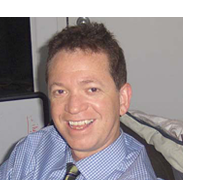
I'm excited to welcome Andrew Mirsky as a guest blogger.  Andrew is an attorney and Principal of Mirsky & Company, PLLC, a law firm with particular emphasis in new media, intellectual property, technology, corporate and nonprofits. He has 17 years' experience as a business and commercial lawyer, including 5 years' experience in company management of media and technology enterprises. Andrew began his law career in New York City at the corporate law firm of Kaye Scholer LLP, focusing on corporate and finance transactions and advising clients in media, healthcare, securities, finance, manufacturing, and real estate. Andrew later worked in-house at a client technology startup, with a business of supply-chain management technology.

Andrew moved to Washington in 1999 and worked in Advertising Operations at The Washington Post Company, before joining Atlantic Media Company as Director of Business Development and Legal Affairs. Atlantic is publisher of The Atlantic Monthly, National Journal and Government Executive

Mirsky & Company is a founding member of the Washington, DC-based industry group "Media Future Now," a monthly lunch forum for the discussion of new media and digital technology business issues impacting content creators, advertisers and marketers, production and operations managers, financiers and related new media players. 

Andrew has his law and undergraduate degrees from the University of Pennsylvania, in Philadelphia. He attended high school in Millburn, NJ, and studied classical and jazz piano at the Manhattan School of Music (Preparatory Division), in New York City.

Please join me in welcoming Andy!

in

Citizen Media Law Project is Hiring an Assistant Director

Are you a lawyer interested in dealing with emerging legal issues related to law, journalism, and new media on the Internet?  Would you like to help online journalism and new media ventures meet their legal needs?  Do you want a stimulating yet laid back work environment?

The Citizen Media Law Project (soon to be renamed the Digital Media Law Project) at Harvard University's Berkman Center for Internet & Society is looking to hire an Assistant Project Director/Program Fellow commencing in early 2011 to assist with the project's work.  

The position requires a Juris Doctor degree with admission to at least one state bar and a minimum of 3 years of legal-practice experience with a significant Internet, intellectual property, or media law focus. Previous experience advising clients on non-profit formation or operation is advantageous. Our offices are located at the Berkman Center at Harvard Law School, so you must be willing to work in Cambridge, MA.

We're really excited about this position and about bringing someone new on board to help with our work and supervise and mentor the project's staff attorneys and student interns.  It's a great opportunity for experienced media, Internet, or IP law practitioners who want to serve the public interest, transition to academic pursuits, or simply work in an intellectually invigorating environment.  The Assistant Director will have many opportunities to expand his/her knowledge of technology and law, including frequent interactions with other fellows at the Berkman Center and throughout Harvard University.  read more »

in

Rethink Music: Creativity, Commerce, and Policy in the 21st Century

May be of interest to some of our readers:

The Berkman Center for Internet & Society at Harvard University, in collaboration with Harvard Law School's Journal of Sports and Entertainment Law ("JSEL"), is pleased to announce a CALL FOR PAPERS, seeking policy proposals that advance the interests of music creators, consumers, and entrepreneurs through changes in existing law. The Call for Papers coincides with Berklee College of Music's upcoming conference, "Rethink Music: Creativity, Commerce and Policy in the 21st Century," scheduled to be held in Boston and Cambridge, MA in April 2011. . . .

The "Rethink Music" symposium will focus on economic and policy concerns that dictate the viability of creative industries. The event is designed to provide a forum for high-level deliberation by experts, with input from creators and stakeholders from across the spectrum, about the future of creative works, their distribution, and the laws that regulate them. The event will aim to differentiate itself from the myriad of other music and intellectual property conferences by: (a) focusing on law, economics, and emerging business models together; (b) extensively involving creators; (c) soliciting input from both within and outside of traditional music companies and organizations; and (d) inviting submission of policy proposals and business models.

More information is available here.

Free Speech Savior or Shield for Scoundrels? An Empirical Study of Intermediary Immunity Under Section 230

As many of you who read this blog know, we spend a lot of time thinking about -- and sometimes debating -- section 230 of the Communications Decency Act.  We've often lamented, however, that there isn't a good compilation of all of the 230 cases (Eric Goldman, the dean of the 230 bar, has covered most, if not all, of the cases, but you have to sift through his excellent blog to find them).  Well, back in 2008, I set out to create just such a compilation and after months of wrangling with my editors, the empirical study that research spawned is finally out in the current edition of the Loyola of Los Angeles Law Review.

I won't recount the entire article in this post (it's available as a PDF on SSRN), but I will highlight a few of the more interesting findings.  First, here is the abstract:

In the thirteen years since its enactment, section 230 of the Communications Decency Act has become one of the most important statutes impacting online speech, as well as one of the most intensely criticized. In deceptively simple language, its provisions sweep away the common law's distinction between publisher and distributor liability, granting operators of Web sites and other interactive computer services broad protection from claims based on the speech of third parties. Section 230 is of critical importance because virtually all speech that occurs on the Internet is facilitated by private intermediaries that have a fragile commitment to the speech they facilitate.   read more »

J-Lab: Exploring a Networked Journalism Collaborative in Philadelphia

Our friends at J-Lab: The Institute for Interactive Journalism just released a report analyzing the media landscape in Philadelphia. The William Penn Foundation commissioned J-Lab to conduct the study of Philadelphia's media landscape and the state of public affairs reporting and make recommendations for a possible media investment strategy. It is well worth a read.

Some of the key findings:   read more »

CMLP Publishes Guide to Live-Blogging and Tweeting from Court

As part of our legal guide series on documenting public proceedings and events, today we published a guide to Live-Blogging and Tweeting from Court.  Over the past year, we've published guides addressing how to stay out of legal trouble while documenting activities at polling places and covering the Presidential Inauguration, as well as a series of videos on newsgathering and privacy.  Today's installment in the series looks at the impact of new media on one of our most tradition-bound institutions: the courts.

The question of who is a journalist - and by extension, what is journalism -- has come into sharp relief in the context of media coverage of public events, including access to and reporting at court proceedings, election events, conferences, sporting events, and breaking news.  A critical issue for coverage of these public events is, of course, access to the events in the first place.  But once you are in, what tools can you use to supplement your reporting?   read more »

Finkel v. Facebook: Court Rejects Defamation Claim Against Facebook Premised on "Ownership" of User Content

Back in February, Denise Finkel, a 2008 graduate of Oceanside High School on Long Island, sued four of her former high school classmates and their parents after the students created a private Facebook group called "90 Cents Short of a Dollar," which allegedly contained false and defamatory statements about her. 

Rather surprisingly, Finkel also sued Facebook, claiming that the über-popular social network should be held liable for publishing the defamatory statements because it "should have known that such statements were false and/or have taken steps to verify the genuineness" of the statements. Complaint ¶ 28.  (The complaint also alleges that the students' parents are liable for negligently failing to supervise their children.)

As Eric Goldman presciently noted at the time, "[w]ith respect to the claim against Facebook, this lawsuit is unquestionably DOA."  After all, even a cursory reading of the complaint demonstrates that Facebook qualifies for protection under Section 230 of the Communications Decency Act. Indeed, our database is littered with the wreckage of similar claims filed against social networks that ran aground on Section 230's protective shoals.   read more »

Case That Upended Truth Defense in Libel Actions Ends With Jury Verdict for Defendant

In a closely watched case that challenged (at least in Massachusetts) our long held understanding that truth is an absolute defense to a defamation claim, the jury has returned a verdict for the defendant, finding that it acted without actual malice when it sent an email to its employees stating -- truthfully -- that one of its salesman had been terminated because he violated the company's travel and expense policies.

The case, Noonan v. Staples, Inc., D. Mass, No. 06-10716, involved Staples, the office supply chain, and one of its former employees, Alan Noonan.  Back in February, we reported that the U.S. Court of Appeals for the First Circuit had held that Noonan could hold Staples liable for defamation based on a truthful email a superior sent to employees explaining the reason for Noonan's termination, so long as he could prove that the email was sent with "actual malevolent intent or ill will."  Not surprisingly, the First Circuit's decision sent shock waves through the media defense bar, with Robert Ambrogi, Executive Director of the Massachusetts Newspaper Publishers Association, characterizing it as "the most dangerous libel decision in decades."   read more »

Opening Up the Federal Court System, One Filing at a Time

Anyone who has spent even a few minutes looking for case documents in the federal courts knows what a crusty old system the federal government provides for searching and accessing filings in U.S. district courts and some federal circuit courts.  While these court records are ostensibly public, the sheer hassle of getting to them renders the documents largely inaccessible.  That is about to change, in a big way. 

The folks over at Princeton's Center for Information Technology Policy, along with Berkman's own Steve Schultze, just released a plugin for Firefox (you are using Firefox to read this post, right?) that begins to set these documents free, one motion to dismiss at a time.  Here is how the developers at Recap describe it:

RECAP users automatically donate the documents they purchase from PACER (Public Access to Court Electronic Records) into a public repository hosted by the Internet Archive. And RECAP saves users money by alerting them when a document they are searching for is already available from this repository. RECAP also makes other enhancements to the PACER experience, including more user-friendly file names.   read more »

Palin Threatens to Sue Blogger for Publishing Rumors of Investigation, Ensures Rumors Will Get Wide Attention

Exercising one of the freedoms Americans celebrate on Independence Day -- the freedom to threaten an ill-conceived lawsuit -- Alaska Governor Sarah Palin directed her lawyer to publish an open letter to Shannyn Moore, an Alaska blogger, radio personality, Huffington Post contributor, and frequent guest on MSNBC, threatening to file a defamation lawsuit against her.  The letter also warned the Huffington Post, MSNBC, the New York Times, The Washington Post, and other news organizations that Palin would be "exploring [her] legal options"  if they claimed "as 'fact' that Governor Palin resigned because she is 'under federal investigation' for embezzlement or other criminal wrongdoing." 

The oddly worded four-page letter warns of severe consequences for news organizations that republish rumors suggesting Palin embezzled funds in the construction of a Wasilla, Alaska, sports arena.  In the letter, Attorney Thomas Van Flein states:   read more »

CMLP Partners with YouTube to Help Launch Reporters' Center

As part of today's launch of YouTube's Reporters' Center, which features how-to videos on news reporting, the Citizen Media Law Project created a short video addressing some of the newsgathering and privacy issues people are likely to face as they head out with camera in hand to cover the news.  The two-part series of newsgathering videos (the first video is embedded below, the second video should be up later this week) describe the legal and practical issues you may encounter as you gather documents, take photographs or video, and interview others. 

The YouTube initiative aims to educate budding videographers on a wide array of issues associated with news reporting, such as how to fact check stories, avoid breaking the law while reporting, and adhere to journalistic principles.  According to YouTube's press release:   read more »

Berkman's Cyberlaw Clinic Submits Amicus Brief in Case Involving Prior Restraint and Reporter's Privilege

Today, Harvard Law School's Cyberlaw Clinic submitted an amicus curiae brief urging the New Hampshire Supreme Court to defend the First Amendment rights of a website that covers news about the mortgage industry. The Cyberlaw Clinic, with the assistance of local counsel Paul Apple of Drummond Woodsum & MacMahon in Portsmouth, NH, filed the friend-of-the-court brief on behalf of the Citizen Media Law Project and the Reporters Committee for Freedom of the Press (RCFP) in the case of The Mortgage Specialists, Inc. v. Implode-Explode Heavy Industries, Inc.    read more »

Journalism Graduates: It's Time to Reinvent Journalism

Spring is upon us and with it comes commencement season at universities across the country (Harvard's 358th commencement is this Thursday, FYI).  This is a tough time for graduates in almost every discipline, but especially so for journalism grads.  At least that is the conventional wisdom. 

Which is why it is so refreshing to see a shift in perspective occurring (perhaps even, gasp, a paradigm shift?) at two of this country's preeminent journalism schools: the Columbia Graduate School of Journalism and UC Berkeley Graduate School of Journalism.  In commencement speeches last month, Nicholas Lemann and Barbara Ehrenreich both exhorted the graduates to view these difficult times as an opportunity to reinvent journalism.

From Nicholas Lemann's speech at Columbia (posted by Clay Shirky because Columbia didn't see fit to post it!? - I guess that answers my question about a paradigm shift):    read more »


Copyright 2007-11 Citizen Media Law Project and respective authors. Except where otherwise noted,
content on this site is licensed under a Creative Commons Attribution-Noncommercial-ShareAlike 3.0 License: Details.
Use of this site is pursuant to our Terms of Use and Privacy Notice.