Copyright 2007-23 Digital Media Law Project and respective authors. Except where otherwise noted,
content on this site is licensed under a Creative Commons Attribution-Noncommercial-ShareAlike 3.0 License:
Details.
Use of this site is pursuant to our
Terms of Use and
Privacy Notice.


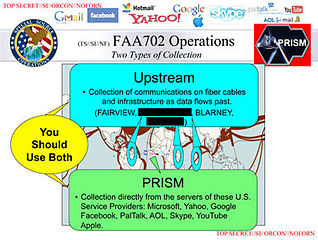
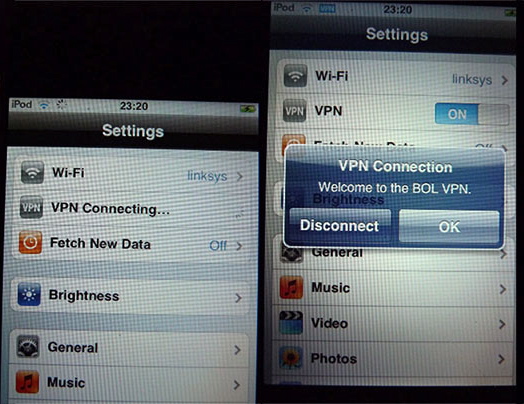 In the days of unwarranted government surveillance and elaborate data collection, people increasingly rely on anonymizing services to keep their online activities private, such as proxy servers, encrypted cloud storage, and virtual private networks. Virtual private networks, or VPNs, route online communications through a secure and encrypted private network to a remote server (sometimes in a jurisdiction with greater protection for freedom of speech or weaker law enforcement).
 (This is the second part of a two-part post. In
 E-readers are spreading both in the U.S. and abroad. Last week the
 First Amendment juggernaut
 We
We 




Description:
On April 7, 2011, clothing company Façonnable filed suit in Colorado federal court against a set of John Doe defendants. According to the complaint, around March 1, 2011, one or more anonymous individuals edited the Wikipedia entries of Façonnable and its parent company M1 Group. The edits discussed "purported" ties between M1 and Hezbollah. (A preserved copy of the Façonnable page is included among the court documents.) The complaint alleges trade libel, violations of Colorado's Consumer Protection Act (for false representations of Façonnable's goods/activities), and federal Lanham Act violations--specifically, that the Wikipedia editors falsely described Façonnable's goods/activities, constituting "acts of infringement."
Façonnable also alleges that the IP addresses of the anonymous Wikipedia editor(s) are associated with Colorado ISP Skybeam, Inc. and that on March 4, 2011, Façonnable emailed (scroll down) Skybeam requesting the identities of the anonymous editors. Skybeam declined to provide the information without a proper summons. In response, simultaneously with the filing of the complaint, Façonnable moved for expedited discovery to subpoena Skybeam for the editors' identities.
On April 8, 2011, the case was referred to a magistrate judge, and on April 18, the magistrate granted Façonnable's motion for expedited discovery. A few days prior, Façonnable had contacted Skybeam to request that the Wikipedia editors' identifying information be preserved. Once its motion was granted, Façonnable subpoenaed Skybeam for that information; Skybeam then responded with a letter objecting to the subpoena. On April 29 Skybeam moved for a modification of the discovery order, arguing that the magistrate judge applied too lenient a standard in granting discovery by failing to account for the editors' First Amendment anonymous speech rights. Façonnable opposed the motion.
On May 24 the magistrate judge denied Skybeam's motion. Expressing concern that Façonnable would have "no ability to vindicate its rights," the magistrate held that the subpoena was a "content neutral" oversight of online speech, and thus the subpoena satisfied a "heightened sensitivity" to the editors' First Amendment rights. The magistrate ordered Skybeam to comply with the subpoena by June 3.
On June 1, Skybeam filed objections to the magistrate's decision with the district court, and moved to stay the order to comply with the subpoena. On June 2, the district court judge granted the stay. Skybeam's memo accompanying its objection expands on the First Amendment concerns in the case (and the need for strict scrutiny in deciding whether or not to enforce the subpoena), discusses the viability of Façonnable's federal Lanham Act claims, and argues for a more stringent five-step test before revealing anonymous speakers' identities.
On June 27, Façonnable filed an unopposed motion for an extension to reply to Skybeam's objections.
Update:
On July 18th, Façonnable filed a notice of voluntary dismissal with prejudice. According to news reports and subsequent court documents, the company reached a settlement with the John Doe defendant.
On July 22, Skybeam moved to vacate the magistrate judge's order to reveal the Doe identities. Skybeam argued that, although the apparent settlement had mooted the question of the propriety of the magistrate's order, Skybeam was entitled to have the order vacated to avoid setting precedent. Skybeam's motion includes some information about the possible terms of the settlement, stating that on July 11, Façonnable offered to dismiss the case, if the John Doe's attorney "would make certain representations on behalf of the Doe . . . including that Doe was not one of the plaintiff's competitors." (The actual settlement terms have not been made public.)
On July 27, the District Court Judge granted Skybeam's motion to vacate, which was unopposed.