

Free Speech
 On Friday, the Department of Justice filed its
 A Click is Worth a Thousand Words: Fourth Circuit Sees the Value of a "Like"
 On Wednesday, the U.S. Court of Appeals for the Fourth Circuit issued its
 Real or Fake, It's Protected by the First Amendment: Court Awards Fees in "Storage Wars" Case

Metadata Surveillance, Secrecy, and Political Liberty (Part Two)
 (This is the second part of a two-part post. In
 Massachusetts v. D'Ambrosio
Metadata Surveillance, Secrecy, and Political Liberty (Part One)
 (Following on from
 Ourway Realty, LLC d/b/a Plainridge Racecourse v. Keen

Monsarrat v. Filcman
DMLP files brief seeking First Amendment scrutiny in United States v. Auernheimer
 Yesterday the Digital Media Law Project, with help from the
 Baker v. Haiti-Observateur Group
The Podcast Patent: Ripping Through, and Ripping Up, the Airwaves

 A Texas company is causing a stir with a claim that it has a patent
 3D Printed Guns and the First Amendment
 Several
France Soon to Say "Get Lost" to its Criminal Offense to the President Law
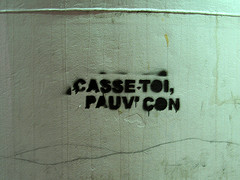 The Legal Committee of France's Chamber of Representatives voted unanimously on March 27 to propose to repeal the offense of insulting the President of the Republic, which is still a crime under article 26 of the French Press law. French Representatives will now vote on April 18 to adopt the proposal to repeal article 26, then will send the proposal to the Senate.
RT the Hate: France and Twitter Censorship, Part Two
 Last October
 Giving Thanks for Free Speech: NH Supreme Court Upholds the Right to Dress Up as Bigfoot for the Fun of It
 Fighting for the First Amendment can often mean confronting and defending vile, caustic, hurtful, and downright disgusting speech. But not all free speech cases address the words of the most hateful or offensive amongst us. Every once in a while you get a case concerning speech at its most fun and playful.
Garcia v. Nakoula
Announcing a Guide to Reporting at the 2012 Republican and Democratic National Conventions
Balancing Interests for an Open Internet: Verizon Challenges the FCC's Net Neutrality Rules
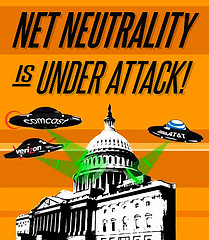 This July, Verizon Communications and MetroPCS Communications filed a brief in the U.S. Court of Appeals for the D.C. Circuit, arguing that the Federal Communications Commission (FCC) lacks the authority to enact net neutrality rules and that these neutrality rules are unconstitutional under the First and Fifth Amendments. Now, debate over the FCC's approach to net neutrality is not a recent development.
Olympic Citius Altius Fortius Pan-American: The U.S. Olympic Committee's Exclusive Rights
 The U.S. Olympic Committee ("USOC") has a reputation for aggressively policing their exclusive rights to certain words, phrases, and symbols. And they have a special act of Congress to back them up.
Rhode Island Repeals Law Criminalizing False Speech Online
 In my four years in Providence, I undoubtedly told some white lies online.
Pages



Description:
The plaintiff, an 18-year old who aspires to be a rapper, posted lyrics on his Facebook page referencing the Boston Marathon bombings two weeks after the bombings occurred. D'Ambrosio also posted that the White House was a "federal house of horror." While his Facebook page has since been removed, in one line of the rap, D'Ambrosio wrote, "everyone you will see what I am going to do, kill people." D'Ambrosio also recorded a Youtube video and sent text messages that referenced the content of this rap.
On May 1, 2013, D'Ambrosio did not attend school, and at least one student, who had seen the Facebook post, notified school officials, who then notified police. D'Ambrosio was arrested one week after the Facebook post and charged with Communicating a Terrorist Threat under Mass. Gen. Laws c. 269, section 14, a felony charge that can bring up to 20 years in prison. According to Chief Solomon of the Methuen Police Department, D'Ambrosio did not make threats against particular individuals or the school in his rap. Judge Lynn Rooney of Lawrence District Court originally set D'Ambrosio's bail at $1,000,000 but this was subsequently revoked, and D'Ambrosio was held without bail.
On May 2, 2013, D'Ambrosio was arraigned in Lawrence District Court and, represented by his attorney Geoffrey DuBosque, plead not guilty on charges of making a bomb threat.
After D'Ambrosio's arrest, Fight for the Future and the Center for Rights posted a petition on their website entitled "Free Cameron D'Ambrosio!" The website detailed D'Ambrosio's arrest and argued for protection of D'Ambrosio's First Amendment privileges and freedom of speech on the internet. The petition received over 90,000 signatures.
On June 6, 2013, a grand jury refused to indict D'Ambrosio on a charge of making terrorist threats and Judge Rooney ordered that he be released on personal recognizance. On June 27, 2013, the charges against D'Ambrosio were officially dropped.