


Perhaps it’s the nightly lobster tails and whoopie pies. Or maybe it’s the Pumpkinhead Ale. Whatever it is that graces his dinner table, Maine Gov. Paul LePage believes it’s none of the public’s business. When it comes to his meals, what’s eaten in the governor’s mansion stays in the governor’s mansion — the state’s Freedom of Access Act be damned.

“We have received requests for all grocery receipts from the Blaine House,” LePage wrote earlier this year. “I understand that taxpayers have a legitimate right to know the amount of money being spent in their house, but the intimate details of our diet goes far beyond funds and into the private details of my family’s life.”
Justin Silverman's blogStrong FOI Laws Expose More Than Just A Governor’s DietPosted December 22nd, 2011 by Justin Silverman
read more »
Bookmark/Search this post with: Policing Political Speech or Just Sex Under the Magnolia Tree?Posted December 1st, 2011 by Justin Silverman
According to the Scene, which received the officers' correspondence from the Tennessee Department of Safety and Homeland Security, state troopers covertly infiltrated the Occupy Nashville encampment for about a month and emailed their observations to superiors. The Scene’s Jonathan Meador wrote that while the emails show "troopers repeatedly comment[ed] on the peaceful and friendly nature of the protesters" at the start, by Oct. 25 the state government was far more focused on, shall we say, bodily functions. Wrote State Capitol Facility Administrator David Carpenter, quoting an unnamed legislative staff member:
Bookmark/Search this post with: Live Tweeting from the ‘Restaurant of Broken Dreams’Posted November 21st, 2011 by Justin Silverman
“I’m listening to a marriage disintegrate at a table next to me in this restaurant,” he wrote. “Aaron Sorkin couldn’t write this better.” He then proceeded to quote the unwitting actors at length, concluding with an exterior photo of the now very public stage, or as he called it, “the restaurant of broken dreams.” While tweeting the anonymous conversations of others is not uncommon (read yesterday's account of an irate plane passenger, courtesy of comedian and fellow traveler Patton Oswalt), Boyle added to his narrative a photo of the couple and instantly sparked a much-needed conversation on privacy, ethics, and online etiquette, now known as #BurgerKingBreakup. In the words of @HuffingtonPost, the Twitterverse exploded. read more » Bookmark/Search this post with: Misleading and Lying Toward a More Open GovernmentPosted November 10th, 2011 by Justin Silverman
In actuality, the intent behind the now-abandoned proposal was much more manipulative, if no less ironic. Here's how it's supposed to work: The Freedom of Information Act allows access to records of all departments, agencies, and offices of the Executive Branch of the federal government, including the Executive Office of the President, unless those records fall under one of several exemptions. When asked to produce certain documents pertaining to law enforcement or national security, the federal government can withhold those documents under one of the exemptions, or it could issue a "Glomar" response “neither conforming nor denying the existence” of those records. read more » Bookmark/Search this post with: France Continues to Confuse Censorship with CivilityPosted November 3rd, 2011 by Justin Silverman
It is the latest attempt by the country to regulate the speech of its citizens online, prevent access to information deemed harmful to state interests, and create, in the words of President Nicolas Sarkozy, a “civilized” Internet. This particular decision is especially concerning given that it comes just two years after a scathing report by Amnesty International on the country’s ineffective methods of investigating police misconduct. According to the Jurist, the Tribunal de Grande Instance de Paris, a civil trial court, ordered all French ISPs on Oct. 14 to block access to Copwatch Nord Paris I-D-F, a website that allows citizens to post videos of alleged police misconduct. The police union, Alliance Police Nationale, applauded the decision because it believed the site incited violence against officers. Said the union’s secretary general, the “judges have analyzed the situation perfectly — this site being a threat to the integrity of the police — and made the right decision.” read more » Bookmark/Search this post with: Health Reporters Unite! How One Doctor's Complaint Turned a Public Database PrivatePosted October 20th, 2011 by Justin Silverman
"I wanted to find doctors who were malpractice ‘frequent fliers' and check to see if they had been disciplined, but I never had enough time to develop a viable strategy," Bavley said in a recent interview. "So the story languished on my bucket list." read more » Bookmark/Search this post with: The 'Mugshot Racket': Paying to Keep Public Records Less PublicPosted October 11th, 2011 by Justin Silverman
But the Internet has changed that. Now, those same photos are uploaded to the web on tens, maybe even hundreds, of police and sherriff websites, giving rise to two new online businesses: the mugshot aggregation website and its opposite number, the mugshot removal website. But as David Kravets wrote in Wired, the interaction of these two types of website is more complicated than it seems. And their dealings call into question the reluctancy of states to centralize public records online in the first place. read more » Bookmark/Search this post with: Tell Us, Judge Posner, Who Watches the Watchmen?Posted September 26th, 2011 by Justin Silverman
Bookmark/Search this post with: The War on Terror, 'Material Support,' and the First AmendmentPosted September 19th, 2011 by Justin Silverman
According to the FBI, Jubair Ahmad uploaded a video to YouTube last year that included images of armored trucks being hit by IEDs, footage of leaders from the terrorist group Lashkar-e-Tayyiba ("LeT"), and the audio of a prayer which references "mujahideen" and "jihad." In a second version of the video, Ahmad showed pictures of dead men on the ground, one with a bullet hole in his neck. Other pictures showed Abu Ghraib and U.S. soldiers with an attack dog. Ahmad's YouTube account is now suspended and his video cannot be viewed. Based on the FBI's description of the video, however, it doesn't appear that he called for violence but instead intended "to promote the spread of terror." read more » Bookmark/Search this post with: Zen and the Constitutionality of Twitter 'Cyberstalking'Posted September 6th, 2011 by Justin Silverman
William Lawrence Cassidy joined Kunzang Palyul Choling (KPC), a Maryland-based Buddhist organization, in 1997, claiming to be a reincarnated Buddhist and to be suffering from lung cancer. According to The New York Times, he acceptedmedical assistance from the group, briefly worked in its executive ranks, and developed a close relationship with the group's leader, AlyceZeoli. His relationship with Zeoli and other members, however, soon unraveled. Colleagues found out that Cassidy didn't have cancer as he claimed and they began questioning his credentials. According to the FBI, Zeoli, whospent time with and confided in Cassidy, frequently rebuked his sexual advances. Ultimately, Cassidy left the group, moved from Maryland, and settled in Lucerene Valley, California. From his new home, Cassidy began lashing out at Zeoli and KPC on Twitter. Apparently ignoring such basic Buddhist tenants as showing compassion and avoiding gossip, Cassidy tweeted about Zeoli's alleged sexual promiscuity ("...reputed ex-prostitute..."), impugned her leadership ("...a demonic force who tries to destroy Buddhism"), and called for Zeoli to kill herself. He also attempted haiku ("Long limb, sharp saw, hard drop") and made fat jokes that even third-graders would dismiss as lame ("...so fat if she falls & breaks her leg gravy willspill out"). His tweets – all 8,000 of them – ranged from morbid to juvenile, outrageous to odd. read more » Bookmark/Search this post with: BART Phone Blackout: Did the S.F. Transit Agency Violate Free Speech Protections? Part 2Posted August 26th, 2011 by Justin SilvermanThis is the second half of an analysis of the free speech issues implicated by the Bay Area Rapid Transit (BART)'s shutdown of mobile phone service on Aug. 11 in order to prevent scheduled protests. The first part of the blog is available here. Public Forum Doctrine
Bookmark/Search this post with: BART Phone Blackout: Did the S.F. Transit Agency Violate Free Speech Protections?Posted August 25th, 2011 by Justin Silverman
Bookmark/Search this post with: Baby Brady Photos Removed, But Did AG's Office Overstep Its Bounds?Posted August 19th, 2011 by Justin Silverman
I wish Portnoy presented a more sympathetic case to discuss. The fact that he published a photo of Tom Brady's toddler boy with commentary on the baby's package makes the entire situation feel creepy, icky and, well, uncomfortable to talk about. It's unfortunate, because it overshadows the legally dubious reason why Portnoy eventually removed the content from his blog after days of defending himself to the public: detectives sent by the Massachusetts Attorney General's office showed up at his house last week and asked him to do so, despite the likelihood that Portnoy's actions are legal and his speech protected. If you've yet to hear about the story, here's some background. Per the Boston Herald, David Portnoy published on his blog, Barstool Sports, a magnified picture of Baby Brady in a post titled, "Check Out the Howitzer on Brady's Kid." For those unfamiliar with Barstool Sports, the publication prides itself on its sophomoric humor and photo galleries of local bombshells. And sophomoric humor is what Portnoy says he was going for. read more » Bookmark/Search this post with: Student Journalists in Virginia Need Strict Enforcement of Privacy Protection ActPosted April 20th, 2010 by Justin Silverman
read more »
James Madison University students celebrate each semester with a large block party in a popular neighborhood near campus. Normally, about 2,000 people show up for the "Springfest." But last week more than 8,000 arrived, turning the normally quiet Harrisonburg, Va., town into what the student newspaper there called a "war zone." Partygoers began throwing rocks, beer bottles and cans, injuring dozens of people and causing serious property damage. Two hundred police officers, many wearing riot gear, tried to quell the violence with tear gas, pepper spray Bookmark/Search this post with: Recording Police and Defining 'Plain Sight'Posted April 15th, 2010 by Justin SilvermanAs bicyclist Eli Damon tells the story, a police officer pulled him over on March 20 as he rode his bike in Hadley, Massachusetts. The officer cited him for failing to keep to the right side of the road, and while issuing a ticket for the offense he noticed a camera on Damon's helmet. The officer "told me that by recording his voice without explicitly warning him of it," Damon later said, "I was violating federal wiretapping law." Because federal law permits the recording of in-person conversations with the consent of only one of the parties (see 18 U.S.C. 2511(2)(d)), it's likely the officer had instead meant to cite state law. The Massachusetts wiretapping statute, MGL Ch. 272 § 99, makes it a crime to secretly record an in-person conversation without the consent of all parties to the conversation. Because the statute only addresses secret recordings, those made with a camera in plain sight fall outside the restriction. A 2001 decision by the Massachusetts Supreme Judicial Court made clear that recording police openly does not violate the wiretapping law, and lower courts consistently have recognized that exception. Still, Massachusetts police are charging individuals under the statute despite their cameras being in what most would agree is plain view. read more » Bookmark/Search this post with: Keeping 911 Recordings Public and OnlinePosted April 1st, 2010 by Justin Silverman
When a grizzly bear mauled bicyclist Petra Davis two years ago in an Anchorage park, she called 911 from her cell phone, barely able to speak: "Please help ... bear," she struggled to say. "I can't talk." A fellow biker quickly came to her rescue, grabbing her cell phone and calling again for help: "I have a young girl here who was mauled by a bear and who is in pretty bad shape," Peter Bassinger told the operator. "We need paramedics." Davis, then 15 years old, lay in a dark trail, bloodied, bitten and in the words of one witness, suffering "the most significant traumatic injuries that I've ever seen." With the help of paramedics on the phone, Bassinger helped stabilize Davis until a rescue team arrived. The young biker survived and her story quickly made its rounds online and on television, including NBC's Today Show, during which she was heralded a hero. read more » Bookmark/Search this post with: Calling Out Former Porn Stars? Beware of '2257 Regs'Posted March 24th, 2010 by Justin Silverman
Bookmark/Search this post with: Keeping Online Speech Outside the Schoolhouse GatePosted March 17th, 2010 by Justin Silverman
Bookmark/Search this post with: Candidate Joe Walsh vs. Rocker Joe Walsh: A DMCA KnockoutPosted March 9th, 2010 by Justin SilvermanAfter a month of snarky letter and email exchanges, Republican U.S. Congressional candidate Joe Walsh recently removed a campaign video from his website that used a song by the Eagles band member also named Joe Walsh. Candidate Walsh called the copyright controversy "a distraction" in late January but vowed that he was "not backing down on this." Ultimately, though, he did. read more » Bookmark/Search this post with: Philly, Don't Blame Facebook for Missing the Snowball Fight InvitePosted February 24th, 2010 by Justin Silverman
Bookmark/Search this post with: |
Browse by SubjectDefamation
Anonymity
Copyright
Legal Threat
Access to Gov't Information
Trademark
Third-Party Content
Section 230
User Comments or Submissions
Free Speech
Business Formation
Newsgathering
SLAPP
Criminal
Fair Use
Blogs
False Light
Journalism
CMLP
Consumer Ratings and Reviews
Privacy
Citizen Journalism
Shield Laws
DMCA
Access to Courts
About this BlogContributors to this blog include a diverse group of lawyers, law professors, law students, and others with an interest in new media. The views expressed are solely those of the individual contributors and do not necessarily reflect the position of the CMLP or the institutions with which they are affiliated. To learn more about the CMLP, please click here.
Blog ContributorsArthur Bright Victoria Smith Ekstrand Dan Gillmor Jeff Hermes Andrew Mirsky Andrew Moshirnia Mary-Rose Papandrea Marc Randazza Eric Robinson Joel Sage Andy Sellars Wendy Seltzer Justin Silverman Write for CMLPWe are looking for contributing authors with expertise in media law, intellectual property, First Amendment, and other related fields to join us as guest bloggers. If you are interested, please contact us for more details. Recent Blog Posts
Blog Comments
Navigation |
||
| Copyright 2007-11 Citizen Media Law Project and respective authors. Except where otherwise noted, content on this site is licensed under a Creative Commons Attribution-Noncommercial-ShareAlike 3.0 License: Details. Use of this site is pursuant to our Terms of Use and Privacy Notice. |

Delicious
Digg
StumbleUpon
Reddit
Newsvine
Technorati
In response to local Occupy protests, Tennessee Safety Commissioner Bill Gibbons said in October that “we don’t have the resources to go out and, in effect, babysit protesters.” But as the

When web developer
Give the Obama Administration credit for trying. The President

A French court last month stomped on what we in the United States consider a “basic, vital, and well-established liberty” – the right to record and publish the public activity of police.
Kansas City Star reporter Alan Bavley had a hunch. After years of investigating the health care industry, Bavley began to suspect that state medical boards did not adequately discipline doctors who committed malpractice. Physicians battling substance abuse, for example, were punished far more harshly.
It used to be that mugshots were kept well out of the view. Despite being public records in many states, walls of bureaucracy and simple physical inaccessibility (due to the photos being locked in a police station somewhere) kept them largely out of the public eye.
In what is now their
The U.S. Department of State maintains a

If you thought a spat between Buddhists couldn't devolve into a federal cyberstalking case of dubious constitutionality, consider the following.
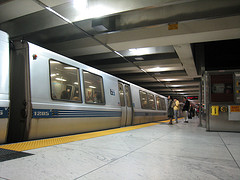
In its Aug. 20 letter, BART officials distinguished a train platform from a traditional public forum, such as a park or sidewalk. “BART has designated the areas of its stations that are accessible to the general public without the purchase of tickets as unpaid areas that are open for expressive activity upon issuance of a permit subject to BART’s rules,” they wrote. If this distinction is made, BART can legally restrict all speech on train platforms so long as their policies are view-point neutral. If the distinction is not made, however, any policy they enact to limit speech will be judged using far more rigorous constitutional tests.
When the
If you've been living in Boston, you've undoubtedly heard the recent uproar over a local website publishing a photo of Ben Brady, the 20-month-old son of New England Patriots quarterback Tom Brady and supermodel Gisele Budchen, playing with his parents on a Costa Rican beach. The public furor arises from two points: 1) Baby Brady was in the buff, and 2) David Portnoy, the author and publisher of the blog, used the photo to comment on the size of the kid's, shall we say, natural gifts.
and foam projectiles. "When you are setting off tear gas and people still aren't leaving, you know it's bad,"
Celebrity blogger
A freshman at Oak Grove High School in Missouri
I understand you're upset, Philadelphia. Plans for a "flash mob" snowball fight last week got